
Building a steel-frame warehouse doesn’t have to be a slow or complicated process. With the right approach, it can be completed quickly, with controllable costs and reliable quality. Below, I will outline the key strategies for efficient construction, address two common questions, explain the benefits of this approach, provide a step-by-step guide to the process, and share the results of two or three real-world case studies.
Part One: Concept Breakdown
To understand how to efficiently construct steel-structured warehouses, it is essential to grasp three core concepts:
1. Prefabricated Production
Major components such as steel columns, steel beams, roof trusses, and wall panels are manufactured in advance at the factory rather than built piece by piece on-site. Factory production is faster, more dimensionally precise, and unaffected by weather conditions such as rain or high temperatures. Once these components are ready, they are transported to the construction site for direct assembly.
2. Simplified Design
Efficient steel-structured warehouses typically feature a streamlined design. For example, they often utilize long-span structures that eliminate the need for interior columns, maximizing usable internal space. Standard sizes are prioritized for steel beams and columns to minimize fabrication time associated with custom dimensions. The simpler the design, the fewer custom components required, resulting in lower costs and faster construction.
3. Coordinated Planning
From design and fabrication to on-site construction, all teams collaborate to finalize the plan at the project’s outset. Decisions regarding the foundation, steel frame installation, roofing and wall materials, and the placement of doors and windows are all coordinated in advance. This prevents situations where modifications are discovered midway through construction, thereby avoiding rework and delays.
Part Two: Two Common Questions and Answers
Question 1: Is prefabricated steel construction more expensive than on-site casting?
Many people assume that factory prefabrication increases costs, but in reality, the total cost of prefabricated steel structures is typically lower.
- Factories produce steel in bulk, resulting in high material utilization and minimal waste.
- On-site construction time is shorter, leading to reduced labor costs and management expenses.
- With a shorter construction period, the facility can be put into use sooner, generating revenue earlier.
Therefore, from an overall perspective, prefabricated steel structures are the more economical choice.
Question 2: Does the fast construction speed affect safety and service life?
No. The safety and durability of steel-structured warehouses primarily depend on design and material quality.
- Factory-produced components are manufactured to strict standards, and their welds and joints are more reliable than those made on-site.
- Steel components undergo anti-corrosion and fire-retardant treatments before leaving the factory, ensuring a service life of several decades.
- The rapid construction is due to the fact that most of the work is completed in advance at the factory, with on-site work limited to assembly; this does not imply cutting corners. On the contrary, factory production ensures more consistent quality.
Part Three: Benefits of This Approach
Building steel-structured warehouses using prefabricated, simple designs and a unified, coordinated approach offers the following key benefits:
- Shorter construction time: From laying the foundation to completing the main structure, the process typically takes only a few weeks—more than twice as fast as traditional concrete structures.
- Controllable costs: Material usage is clearly defined, construction time is short, labor costs are low, and maintenance is simple.
- Optimal space utilization: The large-span design eliminates interior columns, making it easier to arrange goods or equipment.
- High expandability: If expansion is needed in the future, identical structures can be added directly to the sides without affecting the use of the existing sections.
- Environmentally friendly and energy-efficient: Steel is recyclable, construction generates minimal waste, and noise and dust levels are relatively low.
Part Four: Detailed Step-by-Step Guide
Step 1: Determine Requirements and Site Conditions
Clarify the warehouse’s purpose (what goods will be stored, whether overhead cranes are needed, whether insulation is required, etc.), measure the site dimensions, and verify foundation conditions. Also, familiarize yourself with local building regulations, such as height restrictions and setback distances.
Step 2: Select an Experienced Design and Construction Team
Engage a company specializing in steel structure construction to handle design, fabrication, and installation as an integrated service. This helps avoid discrepancies between design drawings and actual fabrication.
Step 3: Complete Foundation Design and Construction
Design the concrete foundation based on the load-bearing requirements of the steel column bases. Foundation construction can proceed simultaneously with factory fabrication of the steel structure to save time. Once the foundation is complete, anchor bolts must be installed with precise positioning.
Step 4: Factory Production of Steel Components
In the factory, cut, weld, drill, and apply anti-corrosion paint to the components according to the design drawings. Quality control can be conducted during production by dispatching personnel or reviewing photos and videos to ensure dimensional accuracy.
Step 5: On-Site Assembly of the Steel Frame
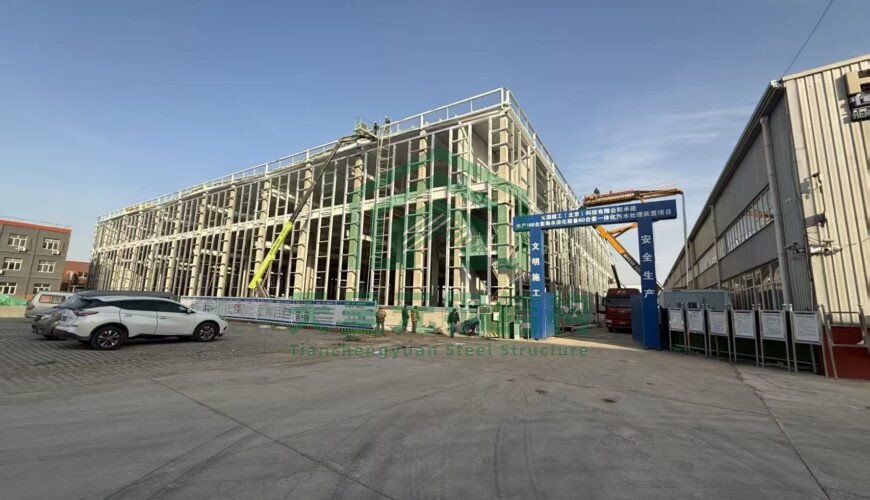
Use a crane to install the steel columns and beams in sequence, securing them with bolts or welding. This phase typically takes only a few days to one or two weeks, depending on the warehouse area. During installation, pay close attention to vertical and horizontal alignment, and promptly install temporary supports to ensure safety.
Step 6: Installation of the Roofing and Wall Systems
Once the steel frame is complete, roof purlins and wall purlins are laid, followed by the installation of roof panels and wall panels. If insulation is required, insulation batting can be added between the panels. Doors and windows are also installed at this stage.
Step 7: Completing the Floor and Internal Systems
Pour the concrete floor and install lighting, fire protection, and ventilation systems. Finally, conduct a comprehensive inspection to confirm that all connections are secure and there are no leaks in the roof or walls, after which the facility is ready for use.
Part Five: Project Results
Case Study 1: A Logistics Company’s Distribution Center
The 5,000-square-meter warehouse utilized a prefabricated steel structure, taking a total of 45 days from foundation excavation to handover. Compared to traditional concrete structures, the construction period was reduced by 60%, and because there are no interior columns, storage efficiency increased by 30%. The client successfully put the facility into operation before the peak season that year.
Case Study 2: Storage Warehouse for an Agricultural Equipment Manufacturer
A 12-meter-high space was required to store large machinery, and the roof needed to withstand heavy snow loads typical of the region. The design utilized a long-span steel frame, with all components prefabricated in the factory; on-site installation took only 12 days. After two winters in operation, no deformation or water leakage issues have occurred, and the client reported that maintenance costs are significantly lower than those of their previous concrete warehouse.
Case Study 3: Expansion Project for a Small Manufacturing Enterprise
An 800-square-meter raw materials warehouse needed to be added adjacent to the existing factory building. Since production could not be interrupted, construction had to be fast and cause minimal disruption to the existing workshop. The steel structure solution involved completing the hoisting of the main steel frame over two weekends, followed by the enclosure of the roof and walls the following week. Production continued as usual throughout the entire construction period. The owner commented, “It felt as if the expansion wasn’t even happening.”
Conclusion
With the right approach, building a steel warehouse can be fast, high-quality, and cost-effective. The key lies in advance planning, opting for prefabricated methods, and ensuring close coordination between design and construction. Regardless of the warehouse’s size, this process can help you deliver a sturdy and functional building within your expected timeframe and budget.
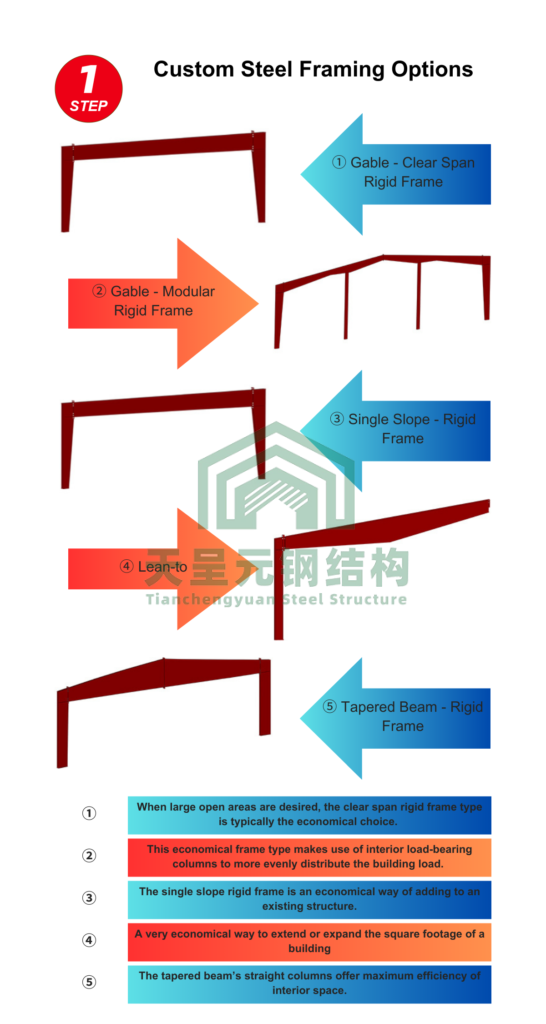
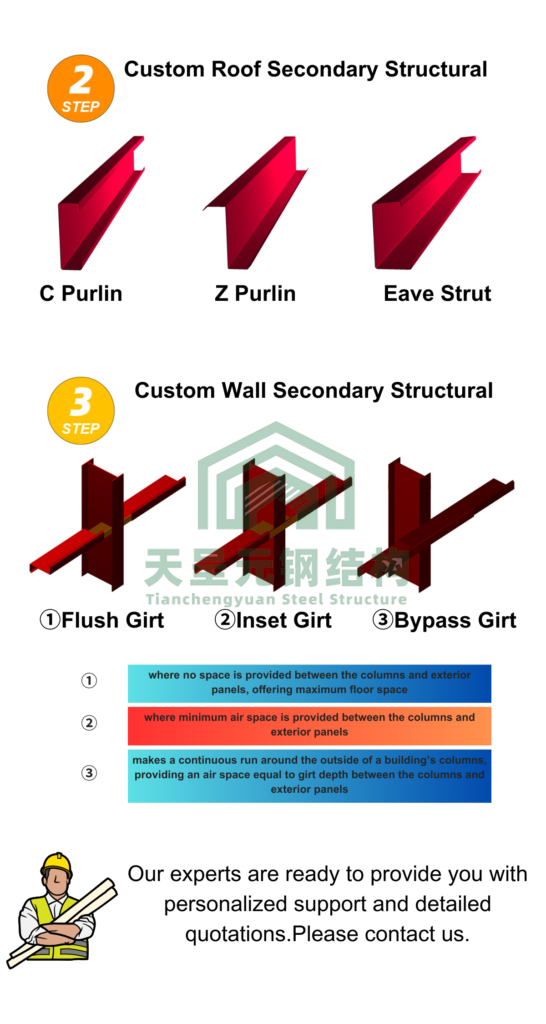
Learn How to customize Steel Framing Structure in 3 Easy Steps
For more steel structure projects , please contact us!
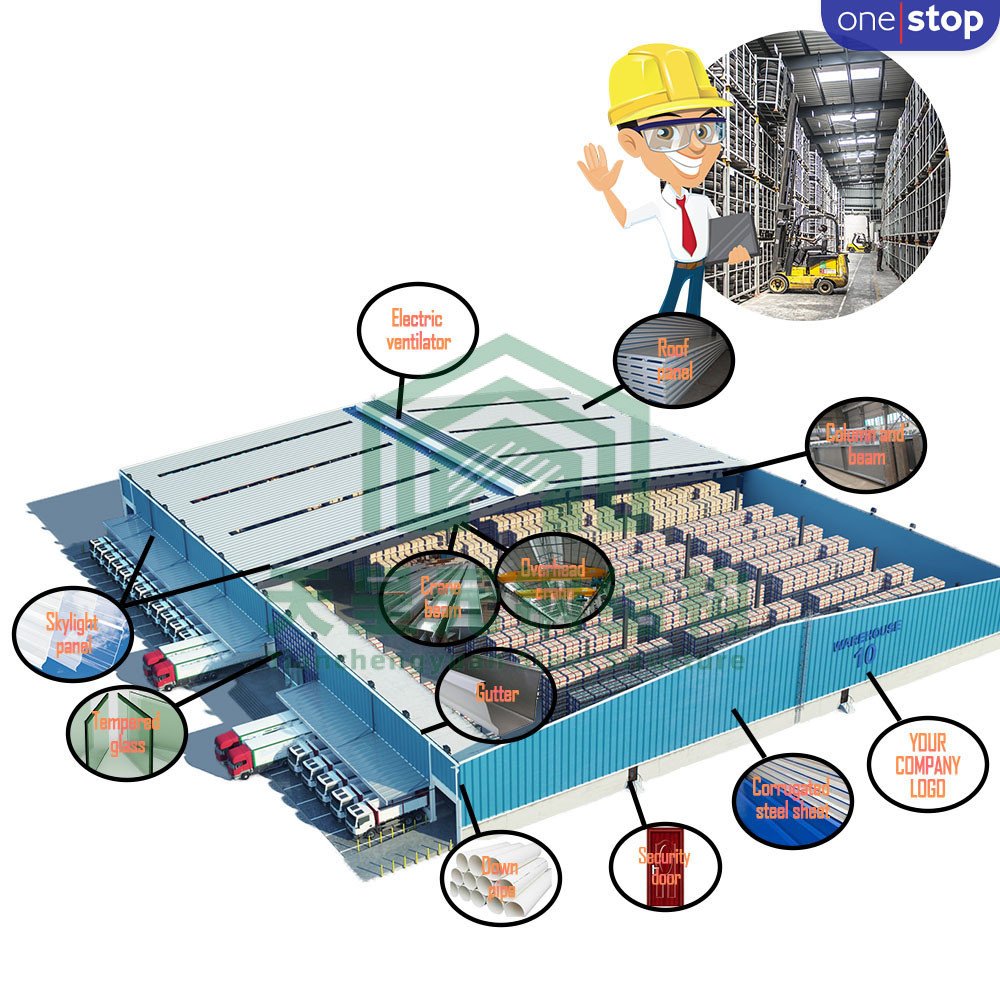
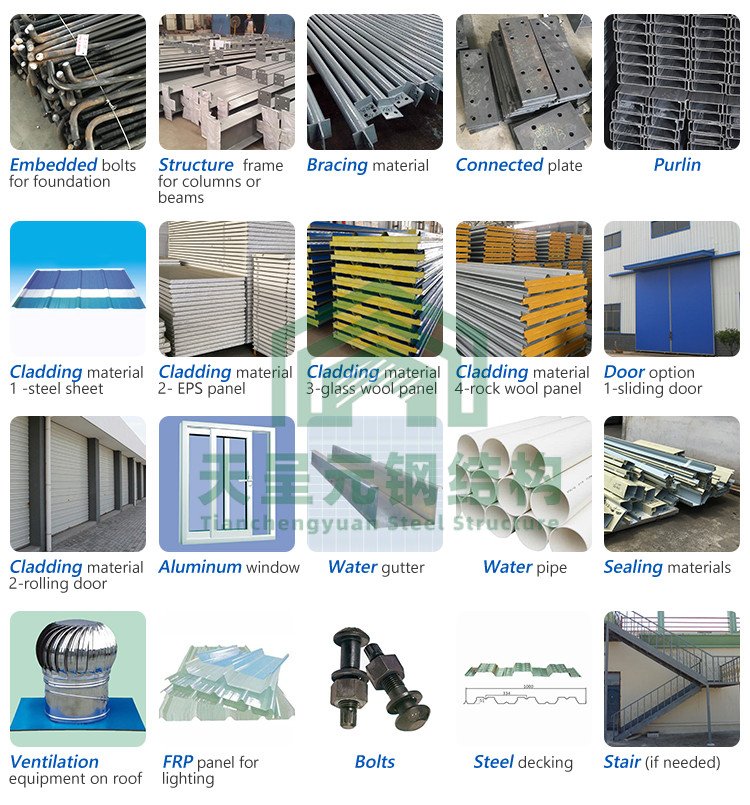
Products materials