
Part 1: What Is a Steel-Frame Warehouse?
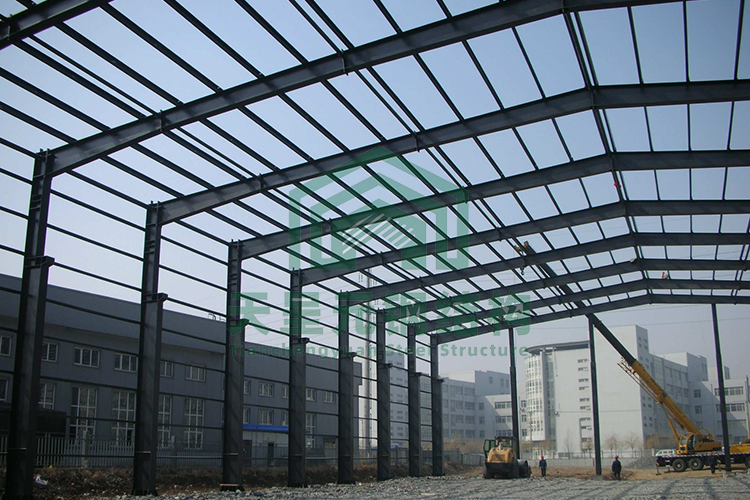
Simply put, a steel-frame warehouse is a storage building that uses steel as its primary load-bearing structure. Unlike traditional buildings constructed layer by layer with bricks or concrete, it is assembled on-site using prefabricated steel components—such as columns and beams—manufactured in a factory, much like building with giant blocks. Once the steel framework is complete, metal roof and wall panels are installed on the exterior, forming a fully finished warehouse.
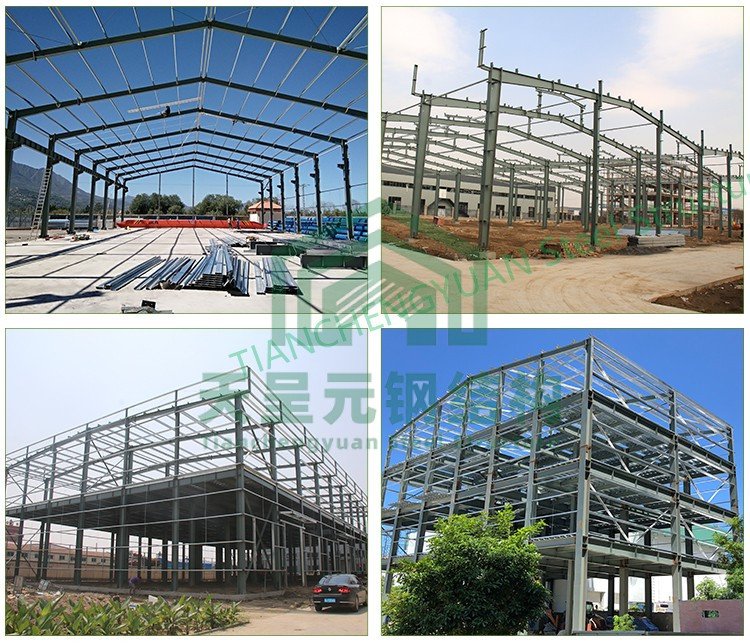 Currently, the most common steel structure systems worldwide include portal frame structures and truss structures. Among these, portal frames are the most widely used in industrial plants and warehouses due to their direct load-bearing capacity, ease of fabrication, and short construction time.
This construction method has become increasingly mainstream in recent years because it addresses many issues that traditional concrete warehouses cannot resolve. For example, for a warehouse of the same floor area, traditional concrete construction might take several months, whereas the main structure of a steel-frame warehouse can typically be installed in just a few weeks. More importantly, it provides a spacious, column-free interior, making it particularly suitable for modern warehousing and logistics needs that require frequent forklift traffic and the use of high-rack storage.
Technically, a standard steel-structured warehouse typically features the following specifications:
-
 Single-span lengths: Generally range from 18 to 36 meters, and in some projects can exceed 60 meters.
 -
Column spacing: Typically 6 meters by 6 meters or 6 meters by 12 meters.
-
Building heights: Generally fall between 8 and 12 meters.
-
Floor load-bearing capacity: Typically required to exceed 200 kN per square meter.
With the proliferation of modern logistics technologies, particularly automated warehousing systems, the design of “obstacle-free” large-scale spaces without internal columns has become increasingly important, making steel structures one of the top choices for modern warehouse construction.
Part 2: Common Questions About Steel-Frame Warehouses
Question 1: Are steel-frame warehouses more expensive to build than concrete warehouses?
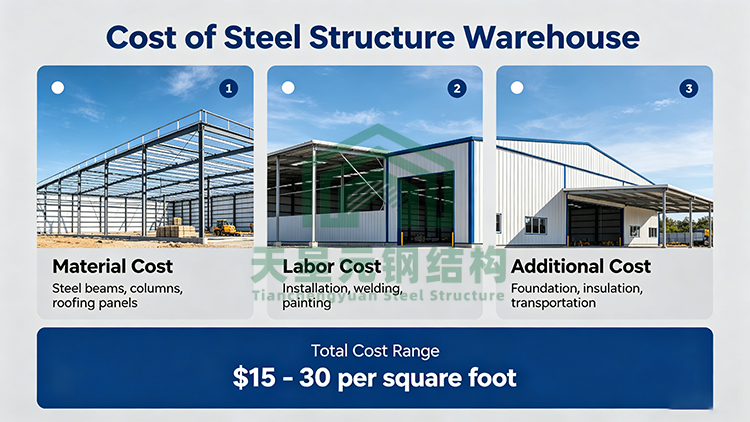
This question actually has two sides to it. Looking solely at the main structure itself, the unit cost of steel materials may indeed be slightly higher than that of concrete. However, when the entire construction process and subsequent long-term operating costs are factored in, the result is often the exact opposite—steel structures are actually more cost-effective.
According to industry data, a conventional 10,000-square-foot (approximately 930 square meters) warehouse built using traditional concrete would require a total investment of roughly $625,000, whereas a prefabricated steel structure warehouse of the same size costs less than one-third of that amount. For example, a 1,000-square-meter steel-frame warehouse typically costs between $50,000 and $90,000, whereas a concrete alternative might range from $70,000 to $120,000. On a per-square-foot basis, the cost of the steel frame itself is approximately $7 to $12, while the concrete foundation alone costs about $20.
Why is the total cost actually lower? There are three main reasons:
-
Labor costs are significantly reduced. Traditional construction requires a variety of skilled workers, such as masons and carpenters, resulting in longer project timelines and higher labor costs. In contrast, steel structural components are prefabricated in a factory, requiring only a small team for rapid on-site assembly.
-
Maintenance costs are lower. Steel does not rot like wood, nor does it crack due to repeated temperature fluctuations like concrete, resulting in significantly lower long-term maintenance expenses.
-
Foundation costs are reduced. From a long-term perspective, the design of lightweight, high-strength steel structures can also reduce foundation costs.
When all these factors are taken into account, light steel structures can reduce initial costs by approximately 20% to 35% compared to traditional concrete solutions, while long-term costs can be reduced by as much as 40% to 60%.
Question 2: What is the service life of a steel structure warehouse? Is it prone to rust or fire?
This is a very reasonable concern, as steel is often perceived as susceptible to corrosion. However, with modern industrial technology, this issue has long been addressed with mature solutions.
With proper anti-corrosion and fireproofing treatments, as well as regular maintenance, the design service life of a steel-structured warehouse can reach 30 to 50 years, placing it on par with traditional concrete buildings. Professional manufacturers apply rigorous surface treatments—such as hot-dip galvanizing or high-quality paint spraying—during the production of steel components to isolate them from air and moisture, thereby effectively preventing rust. For warehouses located in high-salt-fog environments, such as coastal areas, or those used to store chemical products, specialized anti-corrosion coating systems are employed to further ensure the long-term safety of the structure.
Regarding fire safety, while steel itself does not burn, its strength decreases at extremely high temperatures. To address this, all legitimate steel structure projects strictly implement fire protection measures in accordance with standards. Common methods include applying fire-resistant coatings, wrapping the structure with fire-resistant panels, and installing automatic sprinkler systems. After these treatments, steel structures can achieve fire safety levels equal to or even better than those of traditional buildings.
Regarding seismic resistance, steel structures have a distinct advantage—steel possesses excellent toughness and ductility, allowing it to absorb energy and deform during an earthquake rather than fracturing immediately like brittle materials.
Part 3: What Are the Benefits of Steel-Frame Warehouses?
1. Extremely Fast Construction Speed, Allowing for Earlier Commissioning
Steel components are precisely fabricated in factories according to design drawings and then transported directly to the site for hoisting and bolted connections. This eliminates the need for the lengthy on-site processes of mixing, pouring, and waiting for concrete to cure. Take the UK as an example: in 2024, steel-frame structures accounted for a staggering 94.1% of the single-story non-residential building market, largely due to their unmatched construction speed and cost-effectiveness. Faster construction means the warehouse can be put into use sooner, allowing for earlier rental income or savings on leased warehouse costs.
2. Open, Unobstructed Interior Space with Extremely High Space Utilization
This is a standout feature of steel-structured warehouses. Modern steel construction technology enables interior spans exceeding 45 meters—or even 80 meters—without a single load-bearing column inside. As a result, the entire warehouse resembles a completely open hall where racking can be densely arranged according to optimal layouts. Forklifts and Automated Guided Vehicles (AGVs) can navigate freely without having to maneuver around columns. This is particularly important for modern logistics centers that utilize automated storage and retrieval systems.
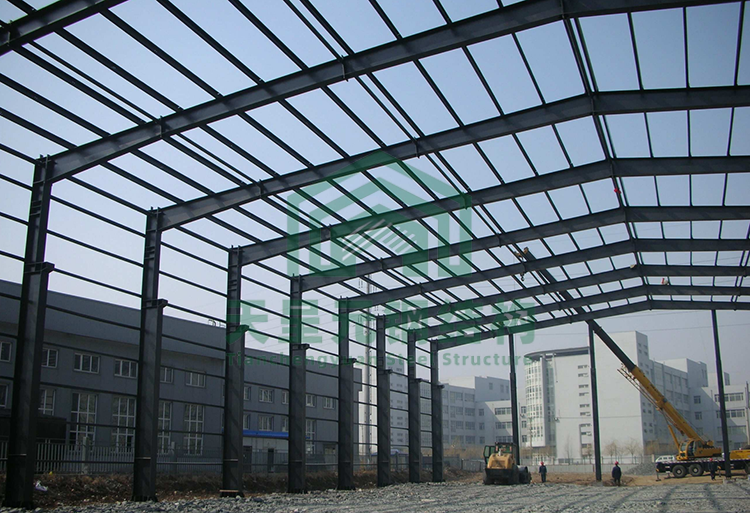 3. Lightweight yet Highly Load-Bearing, with Excellent Seismic Performance
The strength-to-weight ratio of steel far exceeds that of concrete. Under the same load-bearing requirements, steel structural components are significantly lighter. Generally speaking, the ratio of self-weight between steel structures and reinforced concrete structures is approximately 1 to 1.6. A lighter structure reduces the load on the foundation, thereby lowering foundation costs. Additionally, since seismic force equals mass multiplied by seismic acceleration, a lighter structure experiences less seismic force. Furthermore, steel possesses excellent ductility, allowing it to absorb and dissipate energy during earthquakes.
4. Recyclable Materials, More Environmentally Friendly
Steel is one of the most recycled materials in the world, capable of being 100% recycled and remanufactured into new steel products. At the end of a steel-structured warehouse’s lifespan, its steel components can be dismantled, melted down, and reused, unlike the demolition of concrete buildings, which generates large amounts of construction waste. The factory-prefabricated production model also significantly reduces material cutting waste at the construction site.
5. Convenient for Future Expansion or Renovation
Business needs are constantly changing, and warehouse functions and sizes may need to be adjusted accordingly. The modular nature of steel structures makes expansion very simple—just add a new steel frame to one end of the existing building, without even interrupting the warehouse’s daily operations. The internal layout can also be reconfigured to accommodate new production processes, offering high flexibility.
6. Simple Maintenance and Low Long-Term Operating Costs
Steel does not suffer from insect infestation or rot like wood, nor does it crack easily due to temperature fluctuations like concrete. Routine maintenance essentially involves only periodic inspections of the paintwork and drainage systems, with occasional spot repairs. This keeps maintenance costs throughout the entire lifecycle of a steel-structured warehouse very low.
Part 4: What Steps Are Involved in Building a Steel Structure Warehouse?
Step 1: Define Requirements and Preliminary Planning
First, you must clearly define the intended use of the warehouse. Will it store standard cartonized goods, or will it house heavy machinery or chemical raw materials? How many loading docks are needed? Is the installation of an automated high-bay warehouse system being considered for the future? These questions will directly influence the design plan. At this stage, it is common to engage a professional architectural design firm or steel structure manufacturer to assist with a preliminary feasibility assessment.
Step 2: Structural Design and Approval
Once requirements are clear, the design team will use specialized steel structure design software to perform precise modeling and structural analysis. This step involves determining key parameters such as the steel grade (e.g., Q235 or Q355), column spacing, beam cross-sectional dimensions, and foundation depth. Design documents must comply with the building codes and standards of the project’s location, such as the American Institute of Steel Construction (AISC) or the European Eurocode. Once the design drawings are finalized, they must be submitted to the local construction authorities for approval.
Step 3: Factory Prefabrication
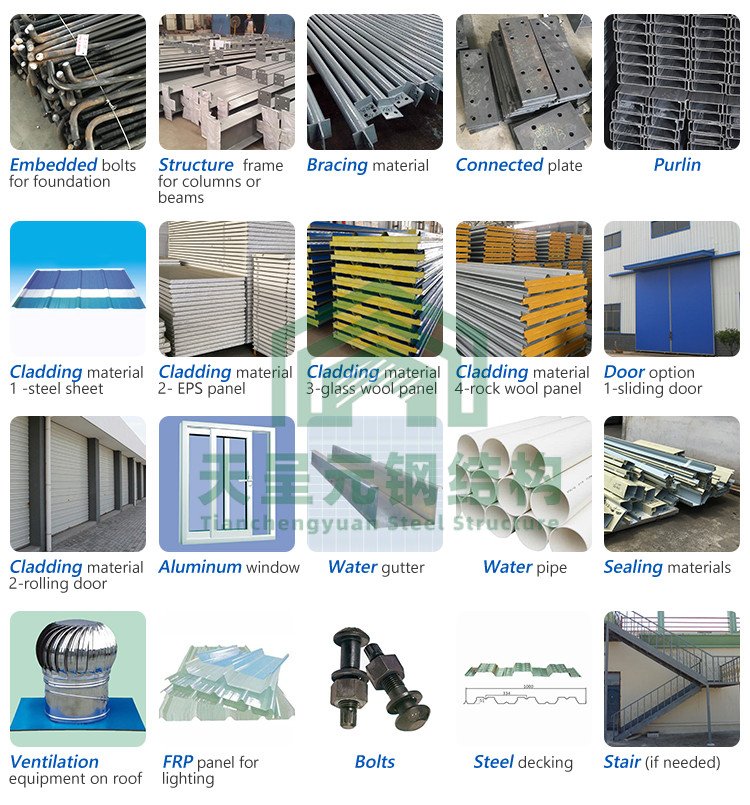
This is the most significant difference between steel structure construction and traditional methods. After the design drawings are approved, all components—including steel columns, beams, purlins, and connection plates—undergo standardized fabrication on factory assembly lines. The factory precisely cuts, drills, and welds the components according to the drawings and applies a rust-preventive primer. Project data indicates that the prefabrication rate for steel structures can reach 100%, with a modular installation rate of 80%.
Step 4: On-Site Foundation Construction and Steel Structure Hoisting
Before the steel components arrive on-site, the foundation work must be completed, including site grading, foundation excavation, reinforcing steel binding, and concrete pouring. Once the foundation reaches its design strength, the hoisting of the steel structure can begin. A professional hoisting team uses cranes to erect the steel columns one by one and securely connect them to the foundation. Steel beams are then hoisted into place at height, and the columns and beams are connected using high-strength bolts to form a stable structural framework.
Step 5: Installation of the Exterior Envelope and Interior Finishing
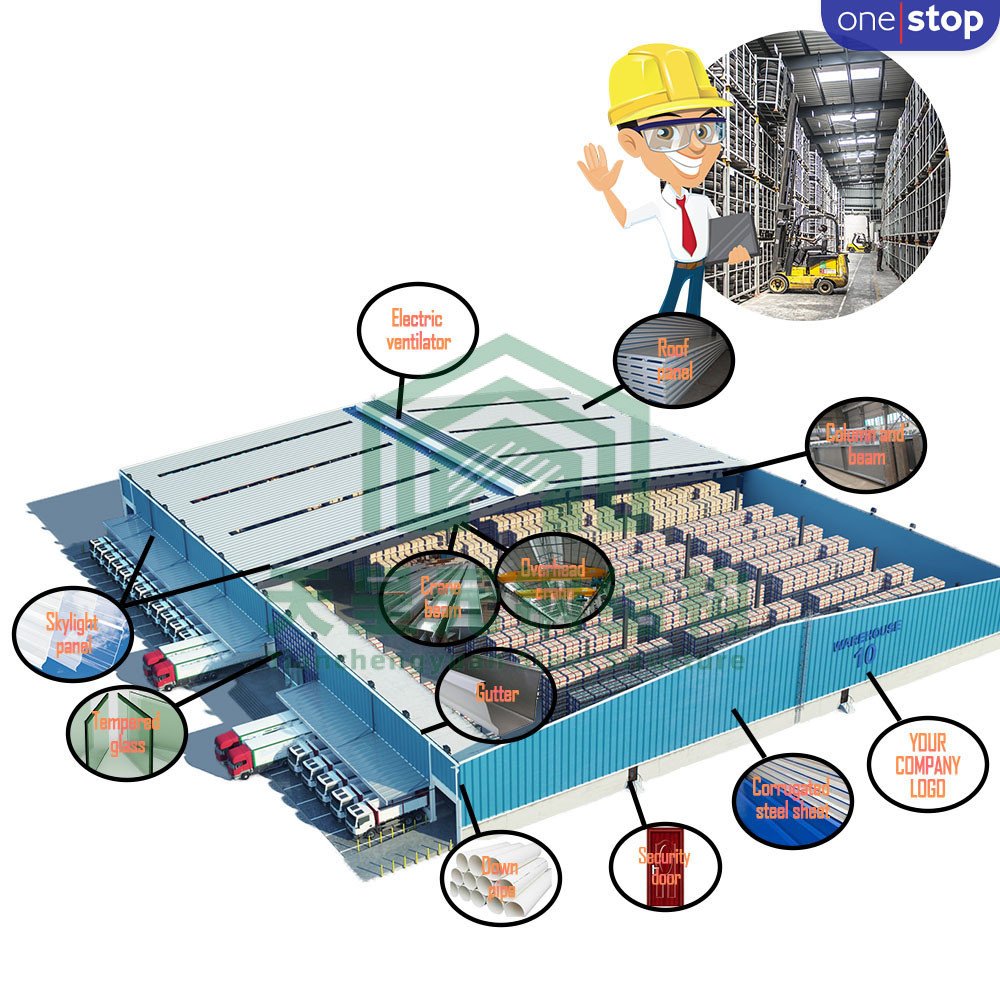
Once the steel structure is complete, the next step involves installing roof and wall panels (typically using color-coated steel sheets or insulated sandwich panels), as well as installing doors, windows, ventilation equipment, skylights, and light strips. This is followed by interior work such as floor hardening, electrical wiring, lighting installation, and fire protection system installation. Finally, after passing the final inspection, the warehouse is ready for official use.
Part 5: Case Studies
Case Study 1: Vejle Logistics Center, Denmark — Steel Structures Support DGNB Gold Certification
Between 2024 and 2025, the Danish company Give Steel constructed a large logistics hub with a total area of approximately 37,000 square meters in Vejle for the transportation and logistics firm Frode Laursen. The project was executed in two phases, with Give Steel responsible for the production, supply, and installation of a total of 1,310 tons of steel structural components.
Key Achievement: The project aimed for DGNB Gold certification (the highest level in the German Sustainable Building Certification System). To meet this goal, the project team implemented meticulous design strategies:
-
Structural design was optimized using wind load calculations to avoid excessive material usage.
-
All steel components were coated with water-based white paint at the factory to minimize environmental impact.
-
The design incorporated 224 trusses and 332 steel columns, eliminating the need for wind bracing on the roof.
Outcome: Carbon emissions across the building’s entire lifecycle have been significantly reduced. The rapid construction speed allowed Phase 2 to begin before Phase 1 was completed, drastically shortening the overall construction timeline.
Case Study 2: Nottinghamshire, UK — The 8-Week Construction Miracle of the UK’s Largest Single-Unit Speculative Warehouse
At the Panattoni Park Central A1(M) logistics park in Nottinghamshire, UK, developer Panattoni constructed the UK’s largest single-unit speculative warehouse (a large-scale logistics facility built without a pre-determined tenant). This warehouse stands 18 meters high, 455 meters long, and 150 meters wide, with a total floor area of 71,535 square meters. It features 100 loading bays and 217 heavy-duty truck parking spaces.
Key Achievement: The 2,000-ton main steel frame was installed in less than eight weeks. Steel contractor Caunton Engineering deployed eight mobile cranes and 14 aerial work platforms. The on-site project manager noted this was the fastest completion of a steel frame of this scale he had ever witnessed.
Outcome: This project demonstrates the absolute advantage of steel in large-scale logistics. In 2024, steel structures accounted for 94.1% of the market share in the UK’s single-story warehouse sector, and distribution center projects accounted for nearly half of the steel consumption in the UK’s structural steel market.
Case Study 3: Auckland, New Zealand — Bluebird Foods 38-Meter High-Bay Automated Warehouse
The Bluebird Foods automated warehouse in Auckland is a highly challenging steel structure project. The warehouse apex reaches 38 meters in height and spans 85 meters in length, utilizing an advanced Automated Storage and Retrieval System (ASRS) for high-density racking.
Key Challenges and Solutions:
-
Airspace Restriction: Located under the flight path of Auckland Airport, the height was strictly regulated, requiring a reassessment of building and fire codes.
-
Seismic Design: Located in an active seismic zone, the design included a 400mm seismic gap between adjacent buildings to prevent collision damage during earthquakes.
-
Fire Protection: Engineers designed a specialized fire protection scheme combining in-rack sprinklers to meet FM Global standards and New Zealand building codes.
Outcome: The building received the 2024 Property Council New Zealand Award of Excellence and the 2023 Steel Construction Excellence Award. The project demonstrated how steel structures can overcome strict site constraints while lowering the overall carbon footprint and labor requirements.
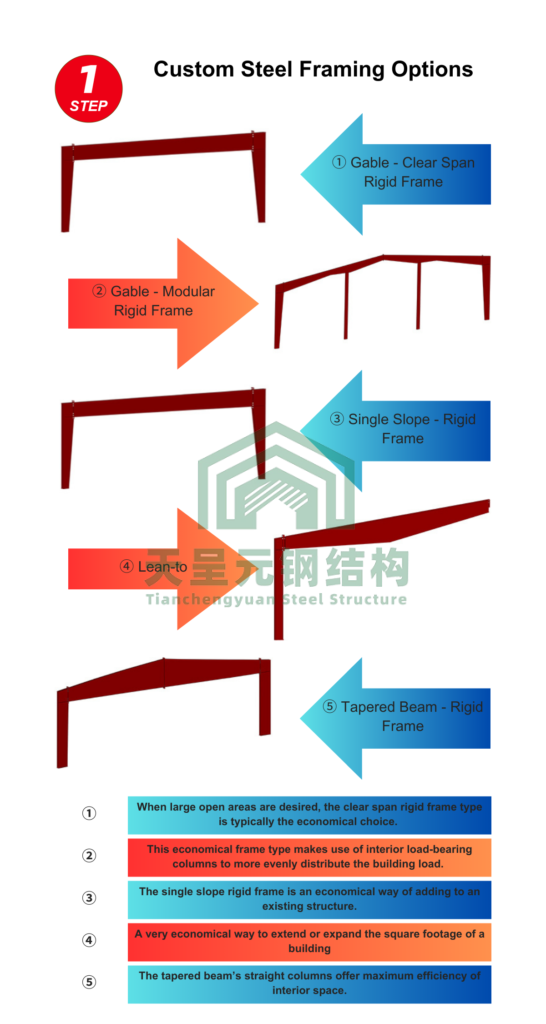
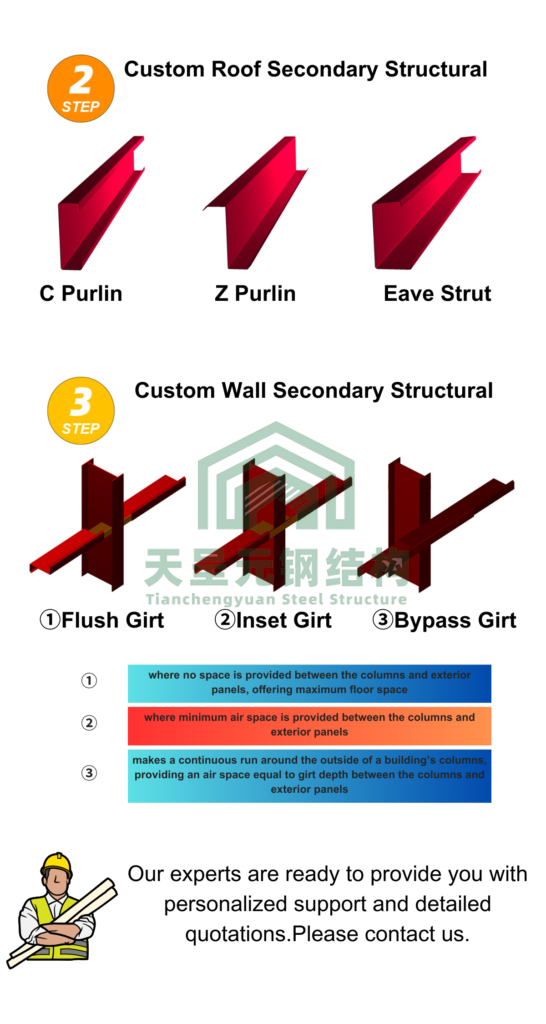
Learn How to customize Steel Framing Structure in 3 Easy Steps
For more steel structure projects , please contact us!
Products materials