

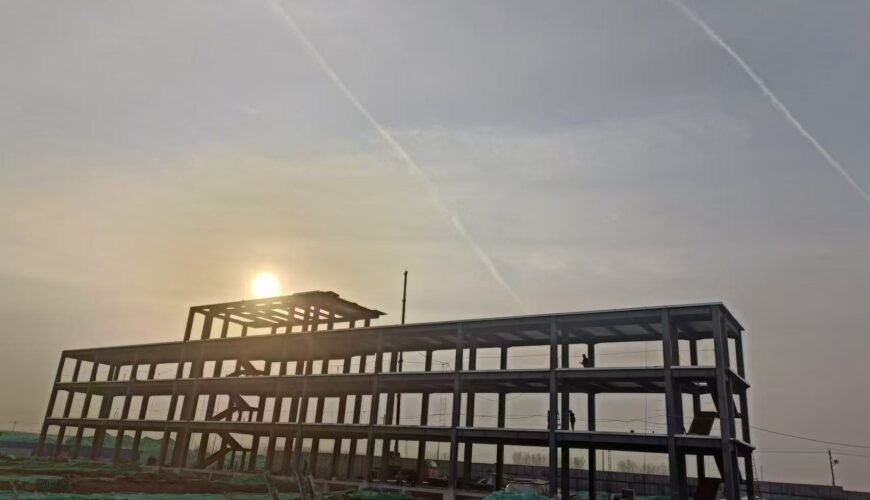
From the soaring spans of bridges to the elegant silhouettes of modern stadiums, truss structures are the unseen heroes of our engineered world. These assemblies of slender members, connected at joints to form a series of triangles, represent a masterclass in efficiency and strength. By channeling loads primarily through axial forces—tension and compression—they achieve remarkable stability with minimal material, a principle that has shaped architectural and engineering marvels for centuries. Today, the fundamental logic of the truss is applied with ever-greater sophistication, from lightweight aerospace frames to expansive warehouse roofs. This exploration delves into the precise design principles, diverse typologies, and cutting-edge applications that make trusses an indispensable and dynamic tool in the modern engineer’s repertoire, proving that sometimes the most powerful solutions are built on simple, geometric truths.
Understanding the Fundamentals of Truss Structures
Understanding the Fundamentals of Truss Structures
A truss is a fundamental structural framework, composed of slender members arranged in a triangulated pattern and connected at joints, or nodes. Its primary purpose is to span long distances efficiently by carrying loads primarily through axial forces—tension or compression—within its members. This efficient force distribution allows trusses to achieve significant strength and stiffness with minimal material, making them a cornerstone of structural engineering.
The essential principle governing a truss is geometric stability through triangulation. A triangle is the simplest rigid shape; it cannot be deformed without altering the length of its sides. When loads are applied to a truss, they are transferred through this stable network of triangles to the supports. Each member is typically assumed to be connected by frictionless pins at its ends, meaning it carries no bending moment. This idealized model allows for precise analysis using methods like the Method of Joints or the Method of Sections, where the forces in every member can be calculated through static equilibrium.
Key characteristics define an efficient truss:
- Two-Force Members: Each member is subjected to only two forces at its ends, resulting in pure axial load.
- Load Application at Joints: For the ideal pin-jointed model, external loads must be applied at the nodes to prevent secondary bending in the members.
- Determinacy: A truss must be properly constrained and have a sufficient number of members to be statically determinate, allowing for straightforward calculation of internal forces.
The performance of a truss is dictated by its geometry. The arrangement of triangles—the truss configuration—directs load paths and determines which members are in tension and which are in compression. Common configurations include the Pratt, Howe, and Warren trusses, each optimized for different loading conditions. The overall depth of the truss is also critical, as increased depth generally enhances bending resistance and material efficiency.
Understanding these core mechanics—triangulation, axial force transmission, and geometric optimization—provides the necessary foundation for exploring specific truss types, advanced design methodologies, and their vast applications, from bridges and roofs to spacecraft and towers.
Key Components and Materials Used in Truss Construction
Key Components and Materials Used in Truss Construction
The structural integrity and performance of a truss are dictated by its fundamental components and the materials from which they are fabricated. A truss is an assembly of slender members arranged in a triangulated pattern, a geometric principle that provides inherent stability by transferring loads primarily as axial forces—either tension or compression. This efficient use of material allows trusses to span considerable distances with minimal weight.
The primary structural components are the top chord, bottom chord, and web members. The top and bottom chords form the upper and lower boundaries of the truss, resisting bending moments through a force couple. Web members, which include diagonals and verticals, interconnect the chords to create the essential triangular subdivisions, stabilizing the structure and distributing shear forces. The points where these members converge are the joints or nodes, which are critical areas of force transfer. Connections, whether pinned, welded, or bolted, must be designed to adequately transfer member forces while accommodating fabrication tolerances and potential secondary stresses.
Material selection is driven by the required strength-to-weight ratio, environmental conditions, fabrication methods, and economic constraints. The principal materials are:
- Structural Steel: The predominant choice for large-scale industrial, commercial, and bridge applications due to its high strength, ductility, and ease of fabrication into complex shapes. It is typically joined by welding or high-strength bolting.
- Timber: Commonly used in residential and light commercial construction. Engineered wood products like glued-laminated timber (glulam) and laminated veneer lumber (LVL) offer enhanced strength and dimensional stability for longer spans.
- Aluminum Alloys: Employed where corrosion resistance or minimal weight is paramount, such as in aircraft hangars, movable structures, and certain bridge applications. Its lower modulus of elasticity compared to steel requires careful consideration of deflection limits.
The choice of material directly influences connection design, long-term durability, and fire resistance strategies, making it a foundational decision in the truss design process.
Common Types of Truss Designs and Their Advantages
Common Types of Truss Designs and Their Advantages
Truss designs are optimized structural frameworks, categorized primarily by their internal web configuration and overall shape. Each type offers distinct mechanical advantages suited to specific span lengths, load conditions, and material efficiencies. The selection of a truss type is a fundamental engineering decision balancing strength, economy, and architectural intent.
King Post Truss
A simple, triangular truss consisting of a bottom chord, two top chords, a central vertical king post, and sometimes two angled struts. Its primary advantage is simplicity and economy for short spans, typically up to 8 meters. It is commonly used in residential roof construction, pedestrian bridges, and industrial sheds where clear span requirements are modest.
Queen Post Truss
This design utilizes two vertical queen posts connected by a horizontal beam, creating a rectangular panel within the triangular frame. It is advantageous for slightly longer spans than the king post (up to 10 meters) as the two posts better distribute tension and reduce stress on the bottom chord. It provides a larger usable central space, often favored in older residential and light commercial buildings.
Pratt Truss
Characterized by its web members: diagonal members slant downward toward the center, and vertical members are in compression. This configuration is highly efficient for medium to long spans with primarily vertical loads. The design places the longer diagonal members in tension, which is ideal for steel construction where slender tension members are efficient. It is a standard choice for railway and road bridges.
Howe Truss
The inverse of the Pratt truss, with diagonals sloping upward toward the center. In this design, the vertical web members are in tension and the diagonals in compression. This was historically advantageous for timber construction, as the shorter vertical wood members could more easily handle tensile forces with metal rods. It remains applicable for heavy-load scenarios and timber bridges.
Warren Truss
This design employs a series of equilateral or isosceles triangles formed solely by top and bottom chords and diagonal web members, with no verticals. Its primary advantage is material efficiency and a simpler, repetitive construction pattern. It performs well under both static and moving loads, making it ubiquitous in modern bridge engineering, crane booms, and aircraft fuselage frames.
Fink (or Fan) Truss
A variant of the Pratt truss specifically optimized for roof structures. Its web members subdivide the central triangular space into smaller triangles, with multiple diagonals emanating from a single point on the bottom chord. This design efficiently transfers roof loads to the supports over relatively long spans (up to 14 meters) while minimizing the length of individual web members, making it economical for residential and commercial roofing.
North Light Truss
Designed with an asymmetrical profile, featuring one steeply sloping side and one much shallower or nearly vertical side. Its key advantage is the optimal inclusion of north-facing glazing on the steep side in traditional industrial buildings, providing abundant, shadow-free natural light—a critical consideration before artificial lighting was widespread. It remains a signature of older factory and warehouse design.
Applications of Truss Structures in Various Industries
Applications of Truss Structures in Various Industries
The inherent efficiency of the truss—a structure composed of triangular units that transfer loads primarily through axial forces in its members—makes it a fundamental and versatile solution across engineering disciplines. Its optimal strength-to-weight ratio and material economy are leveraged in applications ranging from monumental spans to critical industrial frameworks.
In civil and structural engineering, trusses are ubiquitous. They form the primary support systems for long-span bridges, such as railway and highway overpasses, where designs like the Pratt, Warren, and Howe trusses manage dynamic vehicular loads. In building construction, roof and floor trusses enable column-free interior spaces in commercial warehouses, aircraft hangars, and sports arenas. Their prefabricated nature accelerates construction timelines while ensuring structural integrity.
The aerospace and aviation industry relies heavily on truss principles for airframe construction. Fuselage frames and wing support structures often employ lightweight, high-strength truss configurations to withstand immense aerodynamic forces and payload stresses. Similarly, in mechanical engineering, truss frameworks form the core skeletons of construction cranes, industrial conveyor systems, and heavy-duty vehicle chassis, where rigidity and load-bearing capacity are paramount.
Power transmission and utilities represent another critical domain. The familiar steel lattice towers supporting high-voltage electrical lines are essentially vertical trusses, engineered to resist extreme wind and ice loads over vast distances. Telecommunication towers also utilize this form for stability and height.
Emerging applications push traditional boundaries. In renewable energy, truss structures support large-scale solar panel arrays and form the central towers for wind turbines, particularly in offshore installations where they must endure harsh marine environments. The principles of space frame trusses are integral to modular and deployable structures, used in temporary event staging, disaster relief shelters, and even in orbital satellite frameworks where efficient packaging and reliable deployment are critical.
Ultimately, the truss remains indispensable because it provides a predictable, calculable, and materially efficient method for managing forces. Its continued evolution, often through integration with advanced materials like carbon fiber composites, ensures its relevance in addressing the increasingly complex spatial and load demands of modern infrastructure and technology.
Best Practices for Designing and Maintaining Truss Systems
Best Practices for Designing and Maintaining Truss Systems
The enduring performance of a truss structure is contingent upon rigorous adherence to best practices throughout its lifecycle, from initial conception to long-term operation. These principles ensure structural integrity, safety, and cost-effectiveness.
Design Phase Imperatives
A robust design process is foundational. It begins with a comprehensive analysis of all loads, including dead, live, wind, seismic, and potential dynamic forces. Engineers must select an appropriate truss type (e.g., Pratt, Warren, Vierendeel) that optimally balances span, load, and functional requirements. Material selection—whether steel, timber, or aluminum—must account for strength, environmental exposure, and lifecycle costs. Critical design considerations include:
- Joint Detailing: Connections are typically the critical points of failure. Designs must ensure clear load paths, adequate stiffness, and fabrication feasibility. Pin joints must allow for theoretical rotation, while rigid connections must be detailed to resist moments.
- Buckling Analysis: Compression members require meticulous analysis for global and local buckling, with factors of safety applied per relevant codes (AISC, Eurocode, etc.).
- Deflection Control: Serviceability limits for deflection must be enforced to prevent damage to non-structural elements and ensure user comfort, often governing design for long spans.
Fabrication and Erection Protocols
Design intent must be faithfully executed. Fabrication requires strict quality control of material grades, welding procedures, and bolt pre-tension. All members should be clearly marked for placement. During erection, temporary bracing is non-negotiable to stabilize the structure until it is fully assembled and permanently braced. Lifting points must be engineered, and sequences should follow method statements to prevent induced stresses.
Systematic Maintenance Regime
Proactive maintenance is essential for longevity. A formal inspection schedule should be established, with frequency dictated by environment and criticality. Inspections must focus on:
- Corrosion: Especially in concealed spaces and at joints.
- Connection Integrity: Checking for loose bolts, cracked welds, and fatigue.
- Member Condition: Identifying dents, distortion, or impact damage.
- Bearing Areas: Ensuring supports are free from deterioration, settlement, or restraint.
Findings should be logged in a structural health monitoring file. Any modification, including new attachments or load changes, requires a formal engineering assessment to verify the truss’s capacity is not compromised.
Frequently Asked Questions
What are the fundamental differences between a truss and a frame structure?
The primary distinction lies in how members handle loads. In a truss, all members are connected by frictionless pins (idealized as pin joints), and loads are applied only at the joints. This results in members experiencing solely axial forces—either tension or compression—with no bending moments. A frame structure, however, includes members connected by rigid joints, and loads can be applied anywhere along the member. This induces bending moments, shear forces, and axial forces simultaneously within the members, making analysis more complex.
How do you determine if a truss is statically determinate?
A truss is statically determinate internally if it satisfies the equation m = 2j - 3, where m is the number of members and j is the number of joints. This formula applies to 2D (planar) trusses. For a truss to be completely statically determinate, the external support reactions must also be determinable using the three equations of static equilibrium (ΣFx=0, ΣFy=0, ΣM=0). If m > 2j - 3, the truss is statically indeterminate (has redundancy); if m < 2j - 3, it is a mechanism and unstable.
What is the most efficient method for analyzing complex truss forces?
For hand calculations on complex determinate trusses, the Method of Sections is often the most efficient when forces in only a few specific members are required. It involves cutting the truss into two parts by passing a section through no more than three members (where forces are unknown) and applying equilibrium equations to one free-body diagram. For a full analysis of all member forces, computer-aided finite element analysis (FEA) using stiffness matrix methods is the modern standard, especially for indeterminate or large-scale trusses.
Why are triangular configurations so critical in truss design?
The triangle is the only inherently rigid polygon. Any other polygon (like a rectangle) is geometrically unstable and can collapse under load without deformation of its members—a phenomenon known as “racking.” Triangular configurations ensure kinematic stability by preventing internal collapse mechanisms. In truss design, larger structures are essentially assemblies of smaller triangular units, which transfer loads through pure axial action, making the structure both efficient and predictable.
What are the key considerations when selecting a truss type (e.g., Pratt vs. Howe)?
Selection is driven by load type, material efficiency, and architectural constraints. For uniformly distributed vertical loads (like a bridge or roof), a Pratt truss (diagonals in tension, verticals in compression) is often preferred with steel, as steel is stronger in tension, allowing for slimmer diagonal members. A Howe truss (diagonals in compression, verticals in tension) was historically advantageous for wood, as wood’s compressive strength is higher. Other factors include required clearance, connection details, and the need for openings within the truss web.
How does member buckling influence the design of compression truss elements?
Buckling is the dominant failure mode for slender compression members and is governed by Euler’s critical load formula for long columns: P_cr = (π²EI) / (L_eff)². The effective length (L_eff) depends on the end restraint conditions. In truss design, compression members (chords and some web members) must be sized not just for material strength, but for buckling resistance. This often involves increasing the moment of inertia (I) by using tubular sections, I-sections, or built-up members, and providing lateral bracing to reduce the unbraced length.
What is the “method of joints” and when is its application limited?
The Method of Joints is a fundamental analytical technique where equilibrium equations (ΣFx=0, ΣFy=0) are applied sequentially at each joint to solve for unknown member forces. It is most systematic when starting at a joint with only two unknowns. Its primary limitation is computational inefficiency for large trusses when only a few member forces are needed. It also becomes cumbersome for trusses with many members and joints, where manual calculation is prone to error, making it less practical than matrix methods or the method of sections for targeted analysis.
How are modern long-span trusses designed to account for deflection and vibration?
Deflection is controlled by ensuring the truss has adequate global bending stiffness, primarily governed by the depth of the truss and the cross-sectional area of the top and bottom chords (acting as flanges). Serviceability limit state checks against live load deflection (e.g., span/360) are mandatory. Vibration control, crucial for pedestrian bridges or floors, involves dynamic analysis to ensure natural frequencies fall outside ranges that cause human discomfort (typically above 5-8 Hz). This may require increasing mass, stiffness, or adding tuned mass dampers.
What role do connection details play in the real-world performance of truss structures?
Connections are critical for transferring assumed axial forces and ensuring stability. In steel, connections range from simple bolted gusset plates (approximating pin joints) to fully welded moment connections. Eccentricities at connections can induce secondary bending moments, deviating from ideal truss theory. In timber, metal plate connectors or bolted joints must account for grain direction and bearing capacity. Proper detailing is essential to prevent premature failure due to stress concentrations, fatigue (in bridges), or inadequate rotational capacity.
Can trusses be made from composite materials, and what are the advantages?
Yes, advanced trusses utilize composites like carbon fiber reinforced polymer (CFRP) or glass fiber reinforced polymer (GFRP). Advantages include extremely high strength-to-weight ratios, corrosion resistance, and tailor-able anisotropic properties. They are ideal for applications where weight is paramount, such as aerospace, satellite structures, and high-performance racing. The primary challenges are the high cost, complex joint design (often requiring adhesive bonding and specialized analysis), and susceptibility to damage from impact or environmental degradation.
How is thermal expansion accommodated in long truss structures, such as bridges?
Thermal movements are accommodated through expansion joints and bearing details. Fixed bearings anchor the truss at one point, while expansion bearings (e.g., sliding pot bearings or elastomeric pads) allow movement at others. The truss itself must be analyzed for thermal stresses, particularly if it is statically indeterminate, where restrained expansion can induce significant internal forces. In very long bridges, expansion joints are placed at intervals, and the deck and supporting truss are designed to move independently or as a coordinated system.
What advanced software and analysis techniques are used for optimizing truss design?
Modern optimization uses Finite Element Analysis (FEA) software (e.g., SAP2000, ANSYS, RFEM) coupled with parametric design and algorithmic optimization (e.g., topology optimization, genetic algorithms). These tools can minimize weight or cost subject to stress, buckling, and deflection constraints by varying member sizes, truss geometry, and even topology. Building Information Modeling (BIM) integrates this analysis with fabrication and construction logistics, allowing for clash detection and the creation of precise digital twins for lifecycle management.


